Source level:1A Public equipment registry1B Public agency record3 Trust payment matrix4 Industry-system association
This crosswalk identifies the major building systems and equipment documented at Blue Springs R-IV School District, the material categories associated with those systems and the school construction era, and representative products historically specified for those applications.
Source classification: Systems marked Level 1B are based on Missouri DNR NESHAP asbestos abatement notification records tied to this district, building projects, and material categories. Systems marked Level 1C are based on manufacturer product documentation confirmed in the O’Brien Law Firm PID reference library. Systems marked Level 4 are industry-system associations based on standard school construction practice — no facility-specific document has been identified for those entries, and they are labeled accordingly.
Product citations: Trust citations identify the qualifying product for trust claim purposes. A trust citation does not establish that the product was present at any specific school building — it identifies the qualifying product and the applicable trust fund.
Legal note: A crosswalk entry does not establish that any individual worker encountered any specific product. Individual exposure depends on work dates, job classification, building assignment, duties, and proximity to disturbance activities.
School boiler systems providing steam or hot-water heat to classrooms, gymnasiums, and auxiliary buildings. Mechanical room boilers at schools constructed in the 1950s–1970s used asbestos rope seals, asbestos insulating cements, and preformed asbestos pipe covering as standard-specified materials. DNR abatement notifications for this district document boiler insulation as a material category in regulated removal projects.
Why asbestos was specified: Cast iron sectional boilers and fire-tube boilers used in school buildings of this era were manufactured with asbestos rope door seals, asbestos-containing combustion chamber linings, and asbestos-insulated piping connections as standard product features. Manufacturer product literature of this era confirms asbestos rope seal as an integral boiler component. Multiple Midwest boiler manufacturers — including Weil-McLain, Kewanee, HB Smith, American Standard, and Ajax — specified asbestos rope in school and commercial boiler product lines throughout the 1950s and 1960s.
Material categories historically associated with this system type & era
Boiler rope seal — asbestos braided rope at door and cleanout gasket surfaces
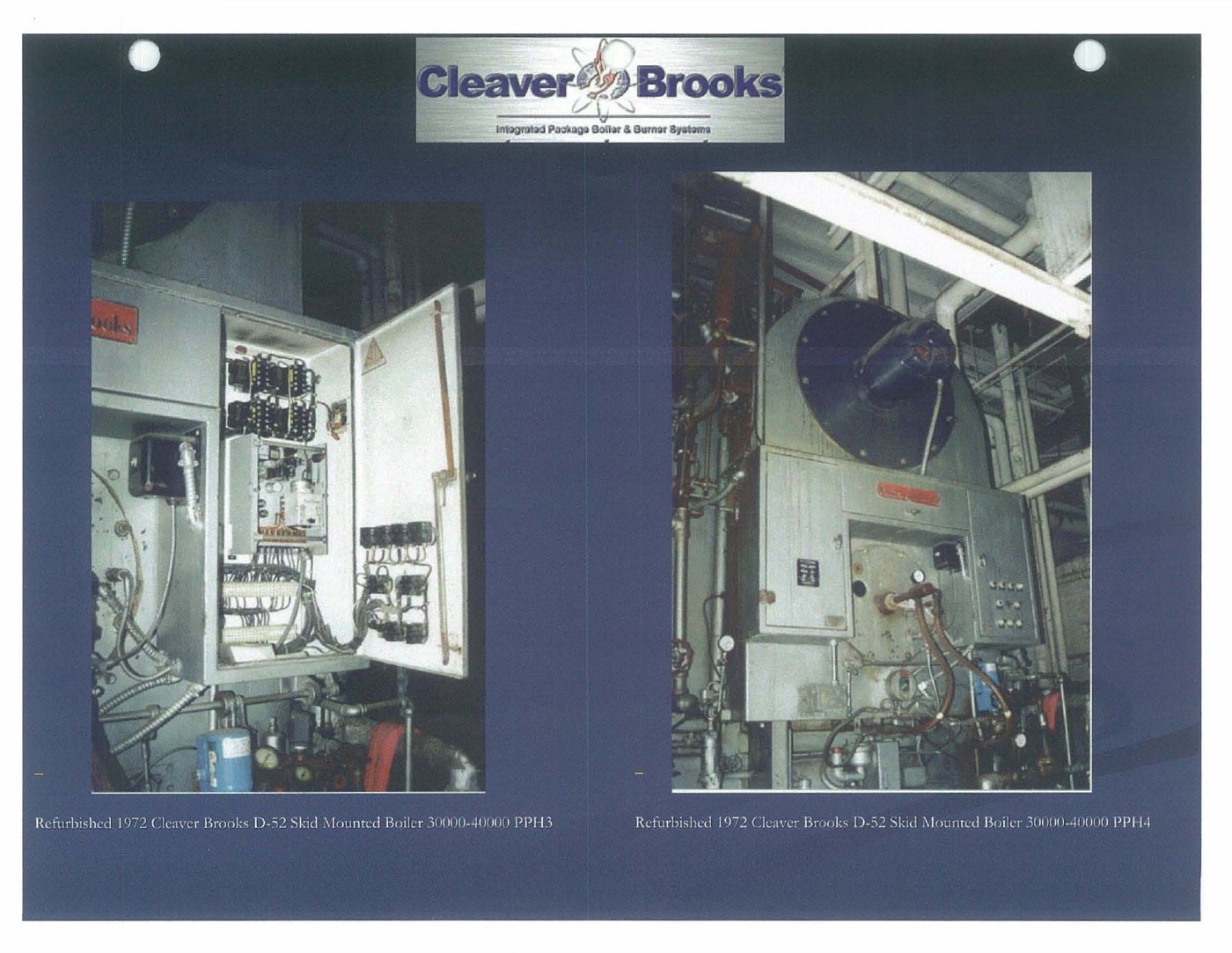
Cleaver-Brooks commercial boiler — school heating era product documentation. O'Brien Law Firm PID reference library.
Source / Citation
Weil-McLain product literature — Weil-McLain Hydronic Division, Michigan City, Indiana — explicitly confirms asbestos rope seal as a standard component across multiple boiler product lines. Weil-McLain Type MGB Gas Boiler: 'Features provision for tankless heaters, asbestos rope seal, factory-assembled burners and base.' Weil-McLain No. 84 Boiler-Burner Unit: 'Cast iron construction, asbestos rope seal.' Weil-McLain Type P-CG Package Gas Heating Unit: 'Features built-in air eliminator, asbestos rope seal.' Source: Weil-McLain product catalog pages documented in O'Brien Law Firm PID reference library (photographed).
No Trust — Civil Litigation
Weil-McLain Company has not filed for bankruptcy. Claims are pursued through civil litigation. Weil-McLain is a frequently named boiler-manufacturer defendant in school and institutional asbestos litigation.
Weil-McLain cast iron sectional and fire-tube boilers were among the most widely installed school heating systems in the Midwest. The asbestos rope seal was an integral product component listed in manufacturer specifications — not a separately applied insulation material. Exposure occurred during boiler servicing, door inspection, combustion chamber work, and rope seal replacement.
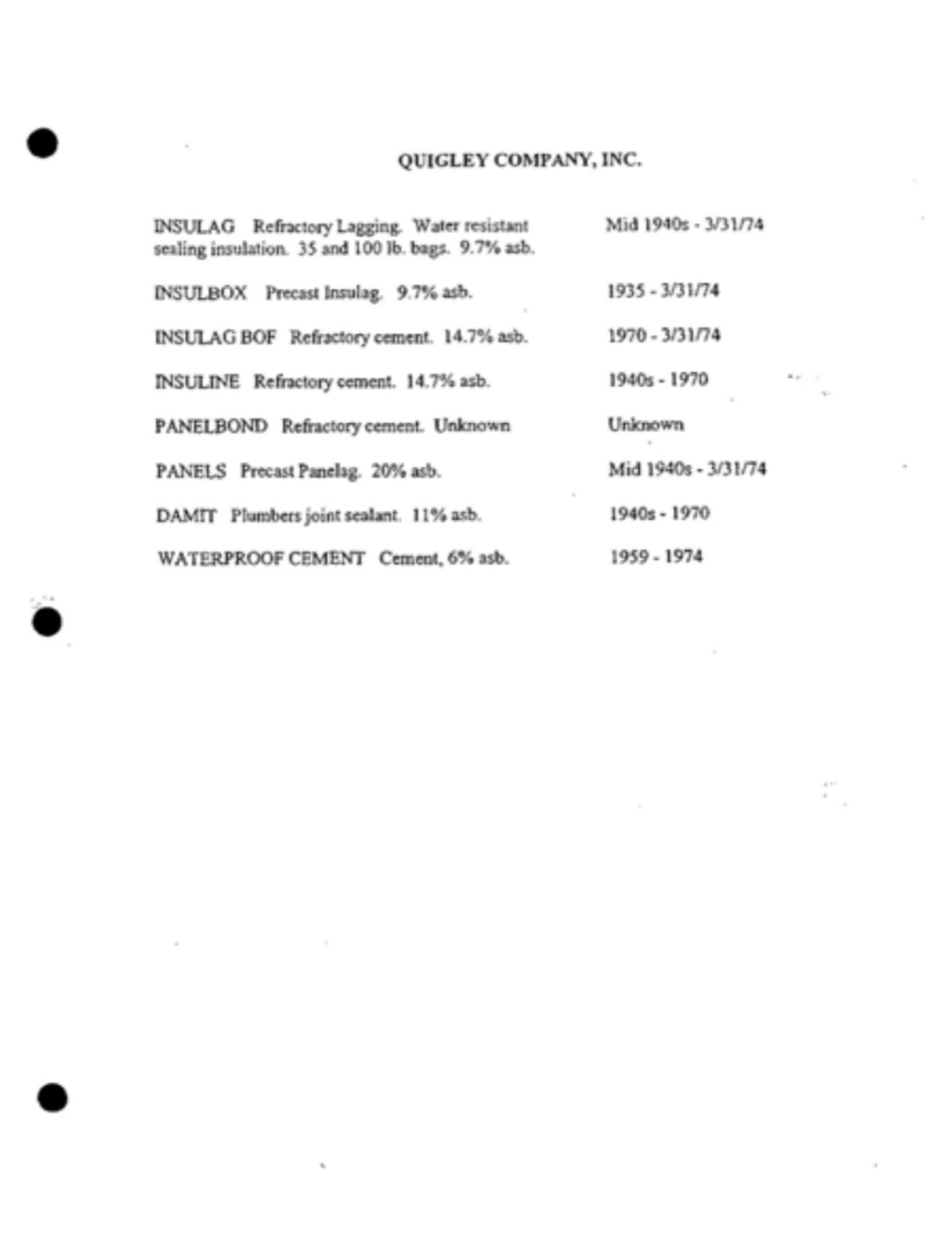
Quigley Company product list — INSULAG 9.7%, INSULBOX 9.7%, PANELS 20% confirmed asbestos % with production dates. O'Brien Law Firm PID reference library.
Source / Citation
Pfizer / Quigley Trust TDP — Insulag and Panelag asbestos insulating cements identified as qualifying Quigley products. Quigley's own product documentation confirms asbestos percentage by product: INSULAG 9.7% (mid-1940s–3/31/74), INSULBOX 9.7% (1935–3/31/74), PANELS 20% (mid-1940s–3/31/74). Source: Quigley Company product list with confirmed asbestos percentages and production date ranges, documented in O'Brien Law Firm PID reference library.
Quigley insulating cements were standard specification for boiler fitting covers, combustion chamber finishing, and irregular surface applications at school mechanical rooms throughout the production period ending 3/31/74.
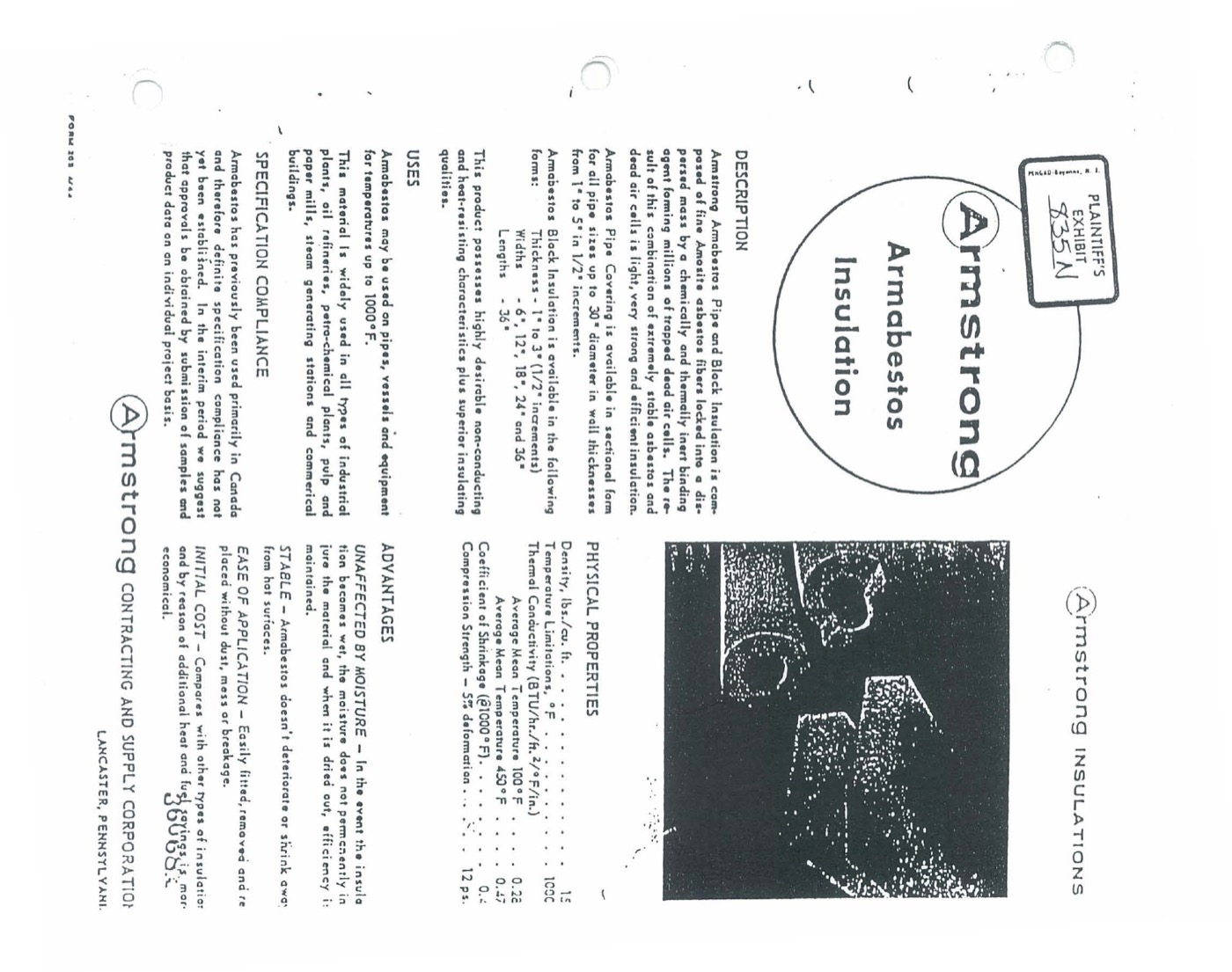
Armstrong Armabestos Insulation — original rotated catalog. O'Brien Law Firm PID reference library.
Mechanical Room Pipe Insulation
Original building construction era, 1950s–1970s; disturbed during DNR-documented abatement projects
Preformed asbestos pipe covering on steam supply and return mains, boiler connections, and hot-water distribution piping in school mechanical rooms, basement pipe chases, and accessible ceiling spaces. DNR abatement notifications for this district identify thermal system insulation and pipe insulation as material categories in regulated removal projects.
Why asbestos was specified: Steam and hot-water distribution systems in schools constructed before 1975 were routinely insulated with preformed asbestos calcium silicate or asbestos magnesia pipe covering. These materials were specified because of their combination of low thermal conductivity, moisture resistance, and the ability to maintain a rigid preformed section. Philip Carey, Armstrong Cork, and Kaylo (Owens Corning) were the dominant pipe covering manufacturers in Midwest school construction throughout the 1950s and 1960s.
Material categories historically associated with this system type & era
Preformed asbestos pipe covering — steam supply and return mains
Asbestos block insulation — boiler connections and equipment
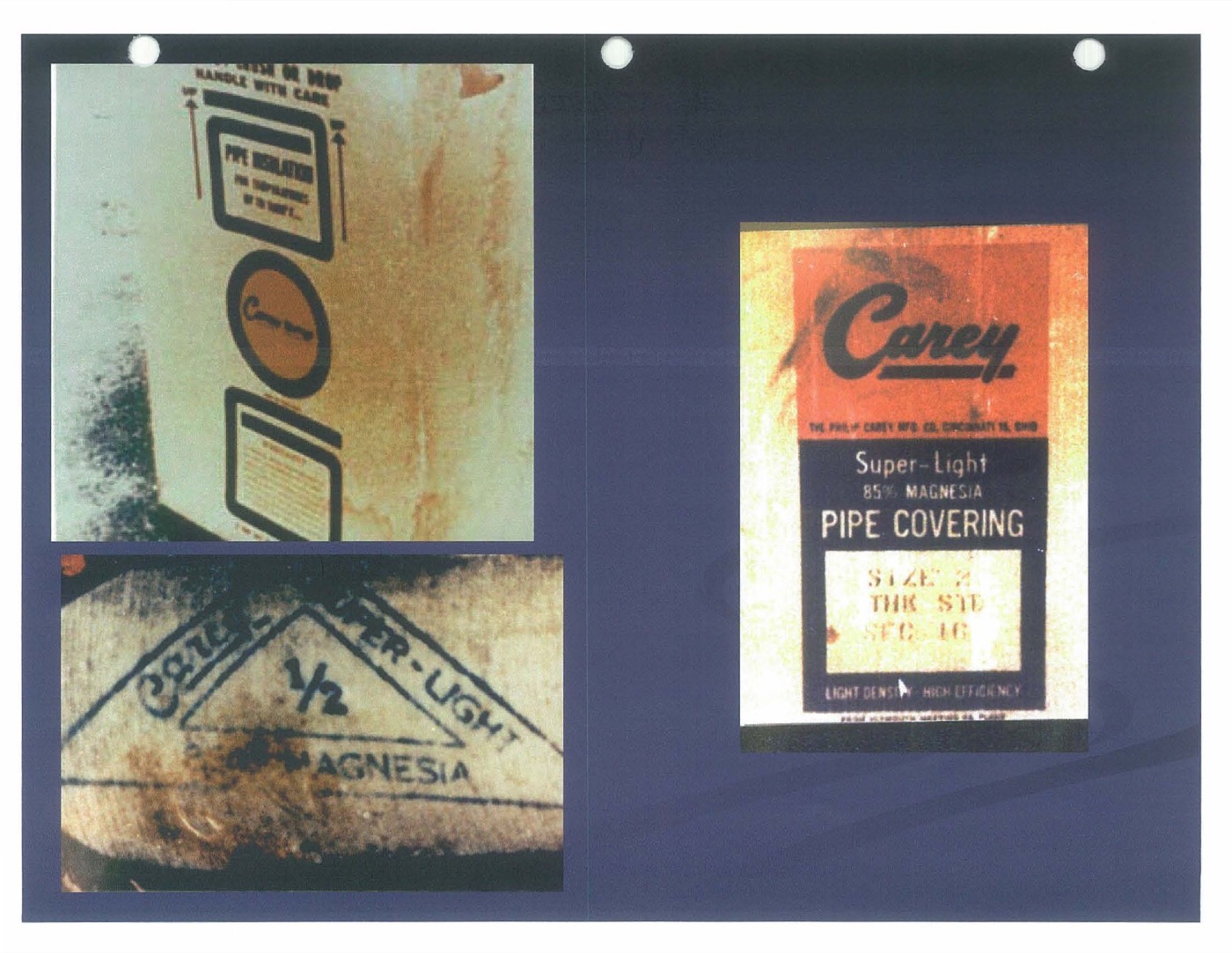
Carey Super-Light Pipe Covering — preformed asbestos pipe section original label. O'Brien Law Firm PID reference library.
Source / Citation
Owens Corning Fibreboard Asbestos PI Trust TDP — Kaylo calcium silicate insulation recognized as qualifying product for pipe insulation exposure categories. Kaylo manufactured by Owens-Illinois 1943–1958, acquired by Owens Corning 1958; asbestos content eliminated circa 1972. Midwest school mechanical rooms of the 1950s–1960s construction era were a primary application for Kaylo preformed pipe sections.
Kaylo was the dominant specification for medium-temperature steam line insulation in Midwest institutional and school construction through the early 1970s. Buildings constructed before 1972 would have received asbestos-containing Kaylo.
Armabestos Pipe Covering
3
✓ Armstrong World Industries Asbestos Personal Injury Settlement TrustPreformed asbestos pipe covering
Armstrong Armabestos — original catalog. O'Brien Law Firm PID reference library.
Source / Citation
Armstrong World Industries Asbestos PI Trust TDP — Armabestos asbestos pipe covering recognized as qualifying Armstrong product for pipe insulation exposure category. Armstrong spec sheet for Armabestos confirmed as exhibit in asbestos litigation records. Armstrong Cork Company (predecessor) manufactured Armabestos pipe covering for steam and hot-water systems in school and institutional applications. Source: Armstrong spec sheet documented in O'Brien Law Firm PID reference library.
Armstrong Armabestos was the most widely distributed asbestos pipe covering brand in Midwest school mechanical rooms. Armstrong's Lancaster, Pennsylvania manufacturing operations produced Armabestos for the full range of steam and hot-water temperatures through the mid-1970s.
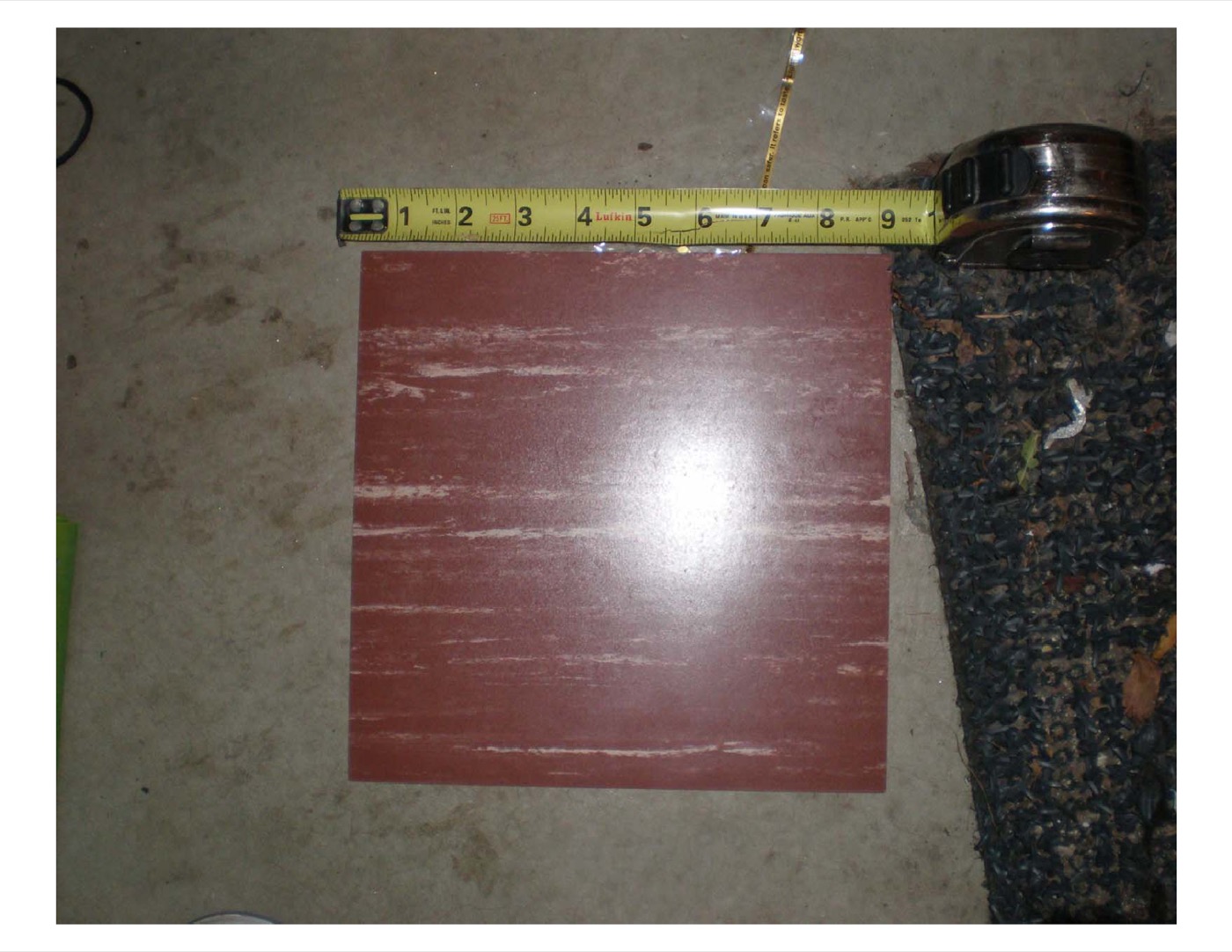
Vinyl asbestos floor tile sample with measuring tape — school and institutional flooring era. O'Brien Law Firm PID reference library.
Floor Tile and Mastic
Original building construction era, 1950s–1970s; DNR abatement documentation includes floor tile and mastic
Vinyl asbestos tile and asphalt asbestos tile installed in classrooms, corridors, cafeterias, and gymnasium locker rooms during original school construction. Floor mastic adhesives used to install tile also contained asbestos. DNR abatement notifications for this district identify floor tile and mastic as material categories in regulated renovation and demolition projects.
Why asbestos was specified: Vinyl asbestos tile and asphalt asbestos tile were the standard-specified flooring materials for school construction from the late 1940s through the mid-1970s because of their combination of low cost, durability, and ease of maintenance. Armstrong, GAF/Ruberoid, Flintkote, and Azrock-Domco were the dominant school flooring suppliers. Floor mastic adhesives — including Armstrong S-90 and similar formulations — also contained asbestos as a reinforcing filler.
Material categories historically associated with this system type & era
Vinyl asbestos floor tile (VAT) — 9x9 and 12x12 inch floor tile
Asphalt asbestos tile — older classroom and corridor installations
Floor mastic adhesive — asbestos-containing tile adhesive and cutback adhesive
Resilient base and trim — asbestos-containing cove base adhesive
Representative products historically specified for this equipment type
Armstrong Excelon and Standard Vinyl Asbestos Floor Tile
3
✓ Armstrong World Industries Asbestos Personal Injury Settlement TrustVinyl asbestos floor tile and mastic
Vinyl asbestos floor tile — 9×9 inch school and commercial flooring. O'Brien Law Firm PID reference library.
Source / Citation
Armstrong World Industries Asbestos PI Trust TDP — Armstrong vinyl asbestos floor tile (VAT) and floor tile adhesive (S-90) identified as qualifying Armstrong products for floor-tile exposure categories. Armstrong Asbestos Floor Tile manufactured through 1983. Armstrong S-90 floor tile adhesive (asbestos-containing mastic) documented in O'Brien Law Firm PID reference library. Armstrong Cork Company was the dominant school flooring supplier in the Midwest.
Armstrong vinyl asbestos tile was the leading school flooring product in Midwest institutional construction throughout the 1950s–1970s. Both the tile itself and the S-90 mastic adhesive contained asbestos. Removal, cutting, or grinding disturbs asbestos fibers.
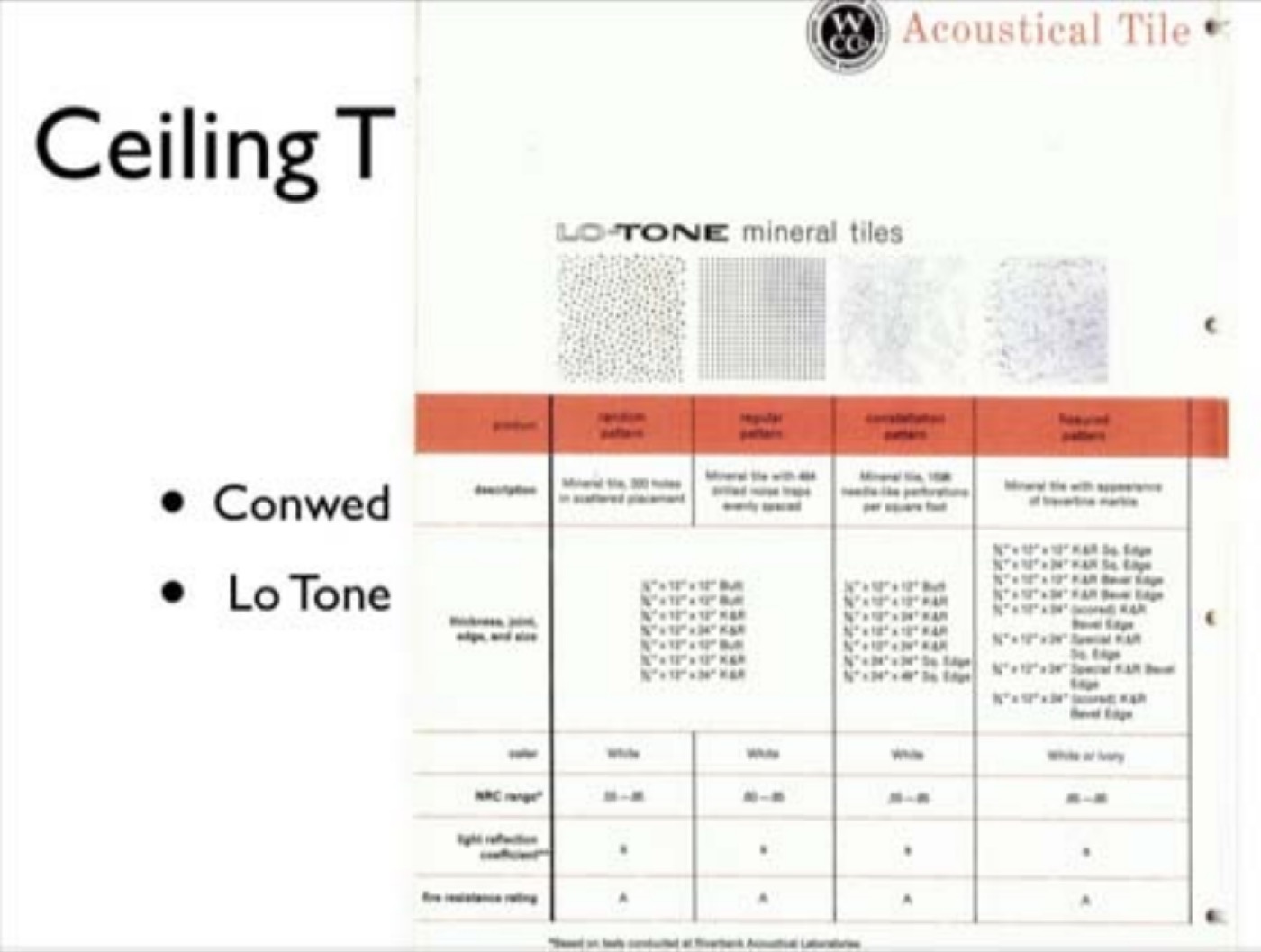
Wood Conversion Company Lo-Tone Mineral Tiles catalog — Random/Regular/Constellation/Featured patterns. O'Brien Law Firm PID reference library.
Acoustic Ceiling Tile
School construction era, 1950s–1970s; disturbed during renovations documented in DNR records
Acoustic ceiling tile installed in classrooms, offices, and corridors at school buildings constructed in the 1950s–1970s. Ceiling tile products of this era from manufacturers including Conwed and Armstrong contained asbestos as a reinforcing fiber. DNR abatement notifications identify ceiling tile as a material category in regulated renovation activity at this district.
Why asbestos was specified: Mineral-fiber acoustic ceiling tiles of the 1950s–1970s era used asbestos as a primary reinforcing fiber in the tile matrix. Wood Conversion Company (which marketed under the Lo-Tone and Conwed brands) and Armstrong Cork Company were leading school ceiling tile suppliers. PID documentation confirms Conwed and Lo-Tone mineral tiles were used in school and commercial buildings of this era.
Material categories historically associated with this system type & era
Acoustic ceiling tile — asbestos-reinforced mineral fiber tile
Lay-in ceiling tile — suspended grid systems with asbestos tile panels
Adhesive-applied ceiling tile — direct-glue asbestos tile on substrate
Spray-applied ceiling texture — asbestos-containing texture in older buildings
Representative products historically specified for this equipment type
Conwed and Lo-Tone Acoustical Ceiling Tile
1C
⚖ No bankruptcy trust — Conwed/Weyerhaeuser successor civil litigationAcoustic ceiling tile — school and commercial
WCC Lo-Tone Mineral Tiles — full catalog page showing school ceiling tile patterns. O'Brien Law Firm PID reference library.
Source / Citation
Wood Conversion Company (WCC) Lo-Tone Mineral Tiles catalog confirms asbestos-containing mineral tile in multiple patterns (random, regular, constellation, featured). PID documentation identifies Conwed and Lo-Tone as school ceiling tile brands. WCC/Conwed tiles were standard-specified school ceiling products in Midwest construction throughout the 1950s–1970s. Source: Lo-Tone Mineral Tile catalog page (WCC) documented in O'Brien Law Firm PID reference library.
No Trust — Civil Litigation
No dedicated asbestos trust fund identified for Conwed Corporation or Wood Conversion Company. Claims are pursued through civil litigation against successor entities.
Wood Conversion Company Lo-Tone acoustical mineral tiles were photographically documented in school and commercial ceiling installations. The tile matrix contained asbestos fibers as a reinforcing component. Perforated tile pattern (regular, random, constellation) was the standard school specification.
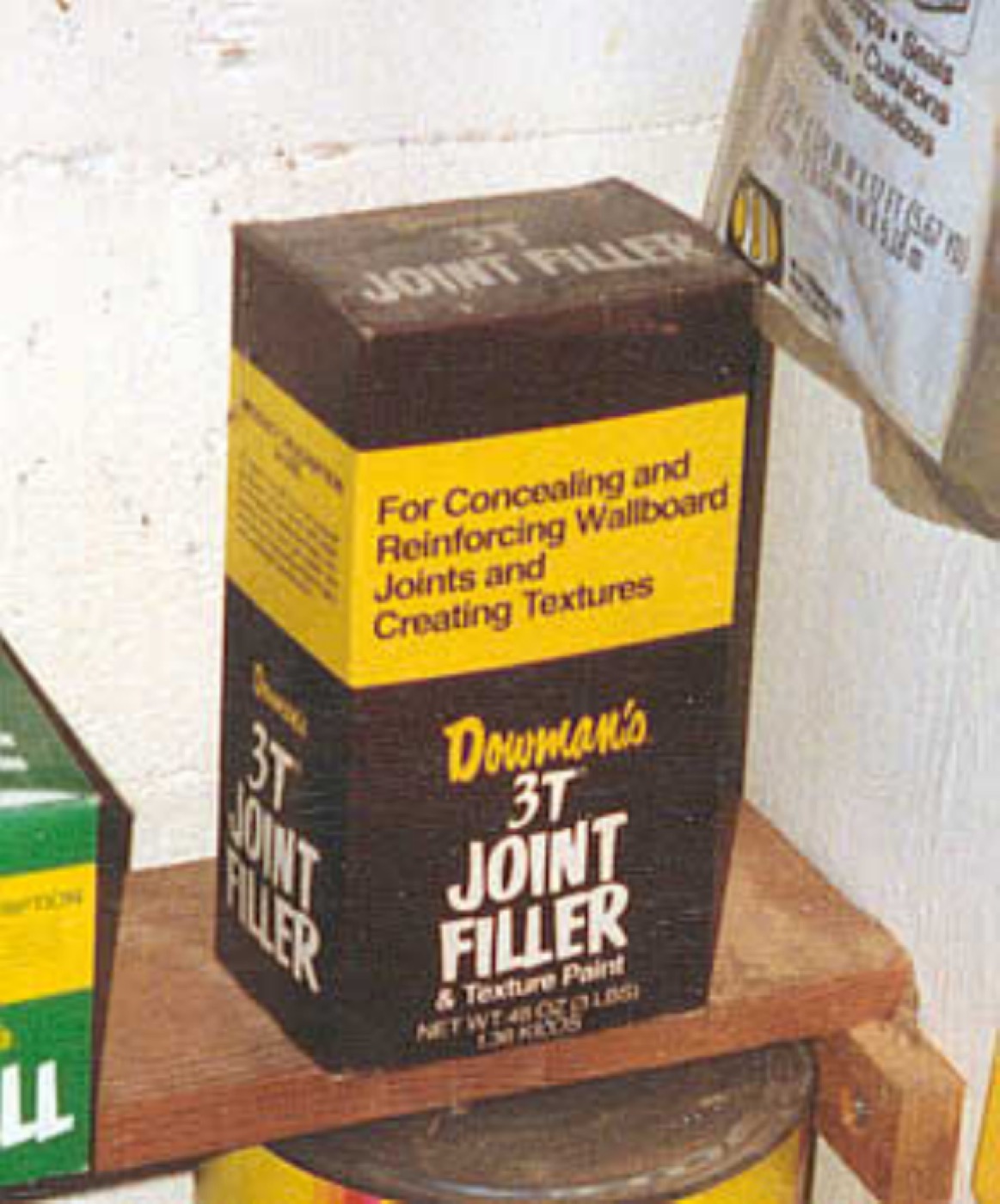
Dowman's 3T Joint Filler & Texture Paint — original product box. O'Brien Law Firm PID reference library.
Joint Compound and Wall Finishing
Original construction and renovation, 1950s–1978; joint compound asbestos phase-out circa 1977
Joint compound and plaster products used during original school construction and subsequent renovation work. All major joint compound manufacturers sold asbestos-containing formulations from the 1930s through the late 1970s. Source note: This entry is Level 4 — industry-system association. No facility-specific joint compound specification document has been identified for this page.
Why asbestos was specified: Asbestos was added to joint compound as a reinforcing filler to improve crack resistance and workability. All major manufacturers — including National Gypsum (Gold Bond), USG (Sheetrock), Kaiser Gypsum, and Georgia-Pacific — sold asbestos-containing joint compound formulations through approximately 1977. Schools constructed or renovated before that date would have had asbestos joint compound applied by finishing contractors.
Material categories historically associated with this system type & era
National Gypsum Company PI Trust TDP — Gold Bond asbestos joint compound, wallboard, and related products identified as qualifying National Gypsum products. National Gypsum Master BK PID reference confirms Gold Bond asbestos joint compound and Gold Bond Asbestos Fiber (Gold Bond Asbestos Fiber 1958–1974). National Gypsum was one of the two dominant school wallboard suppliers in the Midwest alongside USG. Source: Master Bankruptcy Product ID Document (O'Brien Law Firm, October 2012).
National Gypsum Gold Bond joint compound asbestos content was phased out approximately 1977 under CPSC and EPA pressure. Schools constructed or renovated before that date would have received asbestos-containing Gold Bond compound. The trust is active and processes claims for eligible claimants.